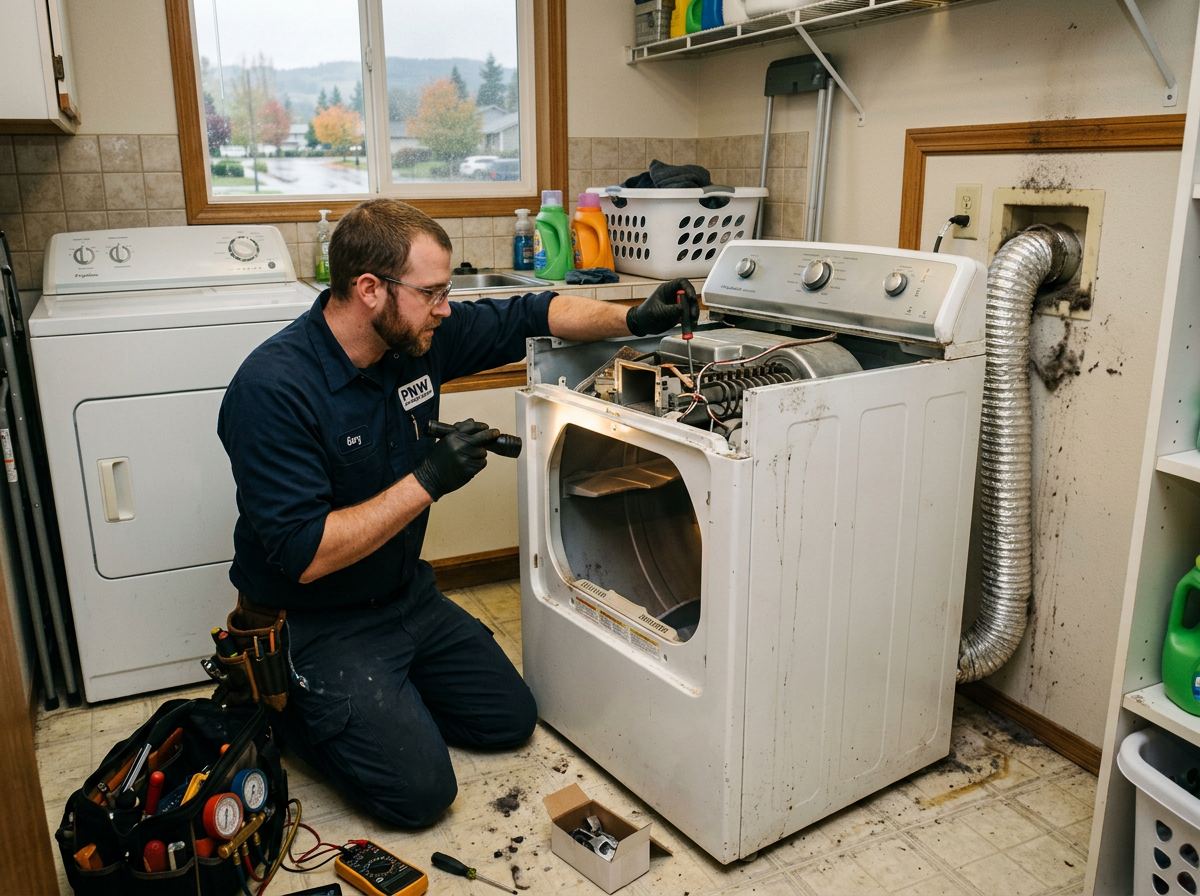
Puyallup’s mild oceanic climate brings frequent rain that raises indoor humidity, forcing dryers to work harder as moist air lingers in exhaust paths. Homes in the Valley and near the Puyallup River often have longer or shared vent runs that trap lint faster when outdoor air stays damp. Older housing stock around Summit and Downtown Puyallup commonly features 4-inch rigid ducts that have settled or been partially crushed during renovations, cutting airflow and extending cycle times by twenty minutes or more. Technicians check for these restrictions before touching any internal components.
Many Pierce County dryers in South Hill split-levels vent through exterior walls that face prevailing winds off the river, pulling extra moisture back into the duct during storms. This creates recurring clogs that standard homeowner cleaning misses. A restricted vent also raises dryer cabinet temperatures, which can trip safety thermostats and shut the machine down mid-cycle. Addressing the full vent path from appliance to termination cap restores normal drying times without replacing working heating elements or sensors.
Technicians serving Tacoma, Sumner, and Bonney Lake customers see the same pattern: homeowners add booster fans or longer flexible hose sections that actually worsen the problem in our wet climate. Proper diagnosis starts with a static pressure test at the dryer outlet and ends at the exterior hood flap. Only after confirming clear airflow do we inspect the lint screen seal, moisture sensor bars, and blower wheel for the secondary issues that appear once the vent is restored.
Technician insight
In Puyallup the thing that catches most people out with Dryer Takes Too Long to Dry is how our constant rain makes lint stick inside the long horizontal runs common in Valley and South Hill homes built before 1990. Homeowners clean the lint screen every load yet never reach the exterior termination near the Puyallup River, so the restriction keeps growing until the dryer runs twice as long.
South Hill Split-Level Dryer
Homeowner in South Hill reported 90-minute cycles on normal loads. Inspection showed a 22-foot vent run with two 90-degree elbows partially crushed behind a finished wall. After replacing the crushed sections with rigid pipe and clearing the exterior hood, the same load finished in 48 minutes with no further thermostat trips.
Dryer Takes Too Long to Dry Services We Offer
✓Full Vent Path Inspection
Measure static pressure and clear lint from dryer to exterior termination in Puyallup homes where rain keeps ducts damp.
✓Moisture Sensor Cleaning
Remove film from sensor bars so the dryer accurately detects dry loads instead of running extra cycles in humid Pierce County air.
✓Exhaust Duct Replacement
Swap crushed or sagging sections with smooth rigid pipe to restore airflow in older Summit and Valley properties.
✓Blower Wheel Service
Clean and balance the blower wheel to move full air volume after vents are cleared in South Hill split-level homes.
✓Heating Element Check
Test element resistance and connections once airflow is confirmed, preventing unnecessary part swaps in Downtown Puyallup units.
How it works
- 1
On-Site Assessment
Arrive at the Puyallup address and test dryer outlet pressure plus vent length and termination condition.
- 2
Vent Clearing
Remove lint and restrictions from the entire run, including any shared sections common near the Puyallup Fairgrounds.
- 3
Component Inspection
Check moisture sensors, blower, and thermostat after airflow is restored.
- 4
Final Test Cycle
Run a full load and confirm drying time returns to normal before leaving the home.
Pricing
Most dryer drying-time repairs in Puyallup are completed with a single vent service call; parts are quoted only after inspection at your address.